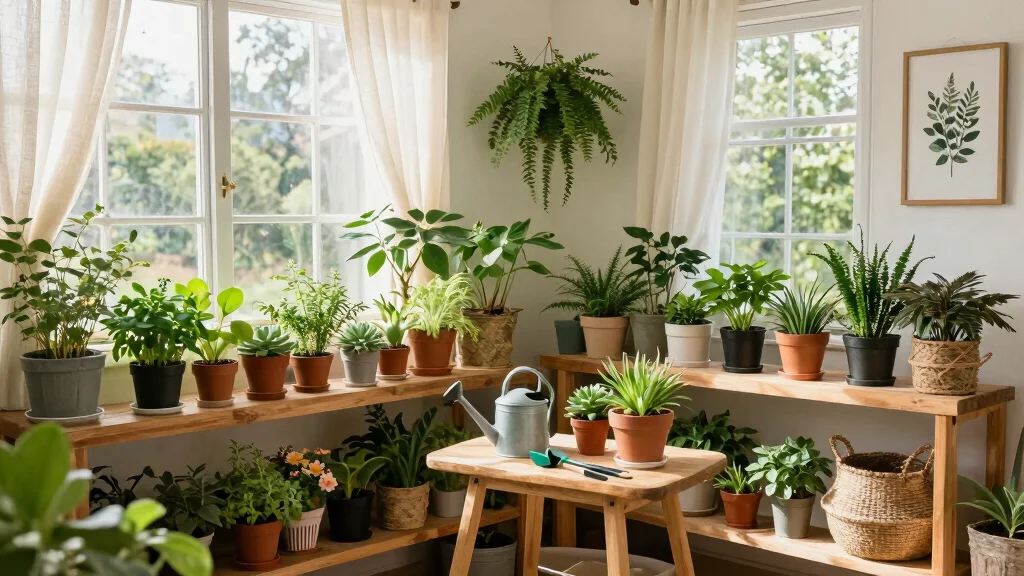
Creating a greenhouse set up inside your home can feel like a dream come true for plant lovers, especially if you’re short on space. If you’ve been craving a green oasis amidst your busy life, this post is for you. Indoor gardening has grown in popularity for good reason. It brings life into your living space and offers a sense of calm. Plus, nothing quite compares to the joy of nurturing your own plants.
This guide is tailored for anyone who is passionate about plants, whether you’re a beginner or a seasoned indoor gardener. You will find a treasure trove of creative ideas tailored to small spaces. I’ve compiled 16 innovative inside greenhouse setup ideas that are stylish, practical, and great for keeping your plants healthy. From vertical gardens to cozy plant nooks, these ideas will inspire you to turn your home into a vibrant botanical haven.
Get ready to explore unique solutions that not only enhance your home decor but also make plant care easier. You’ll learn about space-saving solutions and effective greenhouse organization to ensure your indoor garden thrives. Whether you’re looking for maintenance tips or ways to display your plants beautifully, you’ll find everything you need right here.
Key Takeaways
– Discover 16 creative inside greenhouse setup ideas that fit well in small spaces and enhance your home decor.
– Learn how vertical garden shelves and mini greenhouse cabinets can maximize your indoor gardening potential.
– Find practical plant care tips and indoor plant maintenance strategies for keeping your plants healthy and vibrant.
– Explore greenhouse organization solutions that simplify your plant care routine and make your space more enjoyable.
– Get inspired by stylish ways to incorporate plants into your home, including repurposed furniture and cozy reading nooks.
1. Vertical Garden Shelves
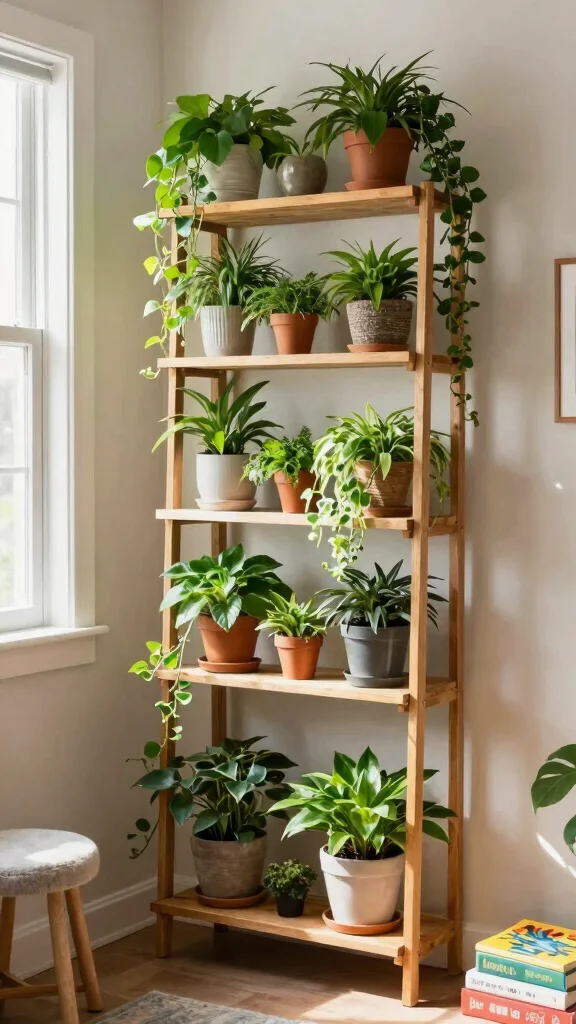
Embrace the beauty of vertical gardening with multi-tiered shelves that showcase your plants while saving precious floor space. This design not only allows for growing a variety of plants but also enhances your decor with a modern touch. By arranging pots at different heights, you can create a stunning visual display while ensuring that each plant receives ample sunlight exposure.
To make the most of this setup, consider using lightweight pots to ease the strain on your shelves. Mixing trailing plants with upright varieties can add dynamic aesthetics to your vertical garden. Additionally, if natural light is limited, think about incorporating grow lights to support your plants’ growth.
Consider these tips to create an impressive vertical garden:
– Pair shelves with wall art for a cohesive look.
– Install shelves near windows for maximum light.
– Use colorful pots to add vibrancy to the arrangement.
– Incorporate small decorative accents between plants for added charm.
This stylish arrangement not only maximizes space but also elevates the overall aesthetic of your home, bringing in a lively touch with varying textures and colors.
Fun fact: Vertical garden shelves can double your plant count in a small space—up to 60% more growing area. Arrange pots at different heights to maximize sunlight and airflow, then keep pots lightweight for easy rearrangement.
2. Terrarium Table Centerpiece

Transform your coffee or dining table with a stunning terrarium centerpiece that brings a touch of nature indoors. These miniature ecosystems are not only visually captivating but also spark conversations among guests. Use glass containers filled with a variety of plants, stones, and soil to mimic a natural environment, creating a delightful focal point.
This decorative piece offers low maintenance and is highly customizable to reflect your personal style. You can easily switch up the plants and materials to fit different seasons or occasions, making it a versatile addition to your decor.
Here are some tips for crafting your terrarium:
– Choose a glass container that complements your space’s style.
– Layer the bottom with rocks, charcoal, and soil for drainage.
– Use small plants for a miniature garden effect.
– Keep the terrarium in indirect light for optimal growth.
This charming setup not only adds greenery to your home but also serves as an enjoyable DIY project that enhances your living space.
How To Choose The Right Indoor Greenhouse Setup
When it comes to setting up a greenhouse inside your home, there are several factors to consider to ensure your plants thrive. Choosing the right setup helps with space, maintenance, and plant health. Here are some key criteria to help you make an informed decision:
1. Space Constraints
Assess your available indoor space before selecting a greenhouse setup. Measure the area where you plan to place your greenhouse. If you have limited space, consider compact or vertical designs that maximize growing surface without taking up much floor area. Think about accessibility as well; ensure you can easily reach plants for watering and care.
2. Material Choice
The material of your indoor greenhouse affects durability and light transmission. Common options include glass, plastic, and metal. Glass provides excellent light but can be heavy and expensive. Plastic is lighter and often more affordable but may not offer the same longevity. Consider your climate and aesthetic preferences when choosing materials.
3. Temperature Control
Plants thrive in specific temperature ranges. Make sure your chosen setup allows for adequate ventilation and heating if needed. You might consider additional equipment like heat mats or small fans to maintain ideal conditions. If you live in a cooler climate, look for greenhouses designed with insulation features to keep your plants warm.
4. Lighting Features
Light is essential for plant growth. Evaluate whether your indoor space receives enough natural light throughout the day. If not, you may want to invest in grow lights to supplement. Different plants have varying light needs, so consider the type of plants you want to grow and choose a greenhouse that can accommodate those light requirements.
5. Organizational Structure
A well-organized greenhouse can help you manage your indoor gardening journey more effectively. Think about shelving, potting benches, and storage solutions. Vertical shelving can save space and allow for better access to plants. You might also want to incorporate drawers or bins for tools and supplies to keep everything tidy and within reach.
6. Budget Considerations
Your budget plays a significant role in the greenhouse setup you choose. Prices can vary widely based on size, materials, and features. Set a budget that includes not only the greenhouse but also accessories like lighting, temperature control, and plant care supplies. Look for deals or consider DIY options if you’re handy to save costs.
Pro Tip: Before making your final decision, sketch out your ideal greenhouse layout on paper. This visual representation will help you determine the best use of your space and which features are necessary for your indoor gardening success. Consider visiting local gardening centers or online platforms for inspiration and to see different setups in action.
3. Window Sill Herb Garden
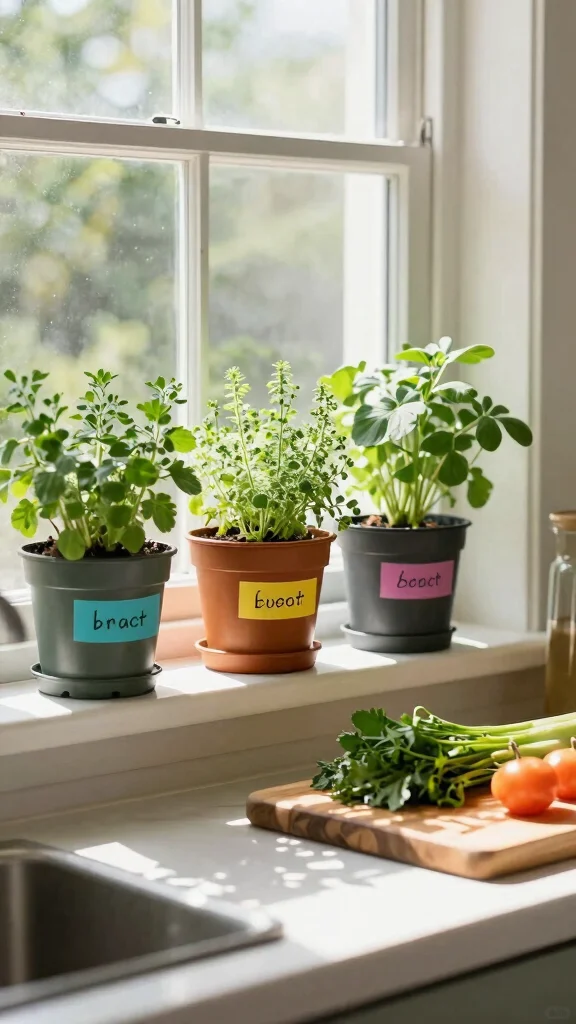
A window sill herb garden is a fantastic way to enjoy fresh herbs while enhancing the aesthetic of your kitchen. This setup allows you to have herbs at your fingertips, making cooking a more delightful experience. Choose pots that fit comfortably on your sill, arranging them for easy access and visual appeal.
This approach not only provides the convenience of fresh herbs but also elevates your kitchen decor with vibrant greenery. It’s a simple and effective way to utilize natural light, creating a thriving environment for your herbs.
Consider these tips for your herb garden:
– Opt for popular herbs like basil, parsley, and cilantro.
– Ensure good drainage in each pot for healthy growth.
– Rotate your pots for even sunlight exposure.
This setup breathes life into your kitchen, making it a vibrant hub for cooking and nurturing plants.
4. Hanging Planters
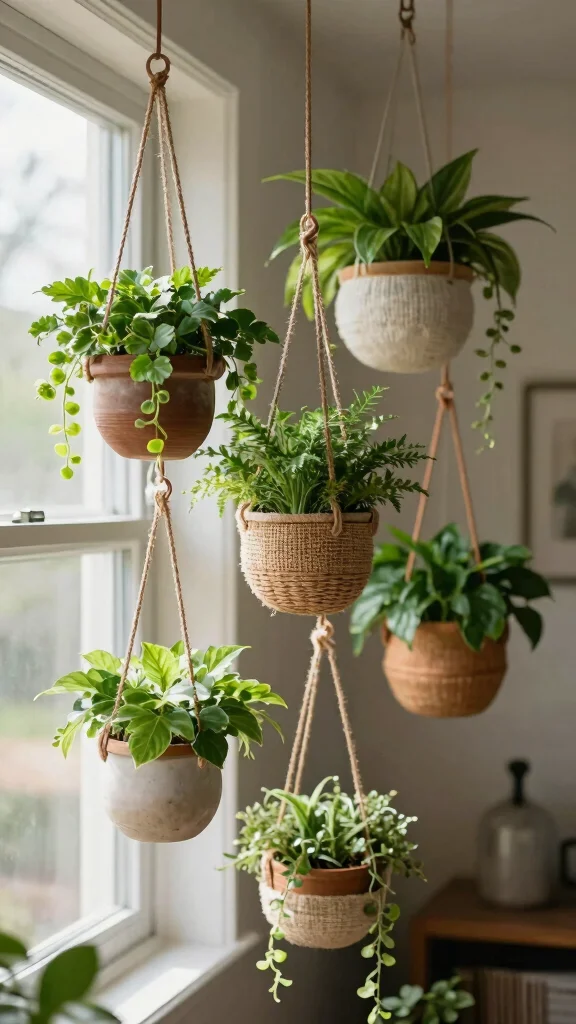
Elevate your decor with hanging planters that introduce dimension and whimsy to your space. These planters not only save floor space but also create a delightful floating garden effect. Use macramé hangers or stylish hooks to display your plants at varying heights, adding depth and interest to your interior design.
This method is perfect for small spaces where traditional shelving may not fit, allowing you to showcase trailing plants beautifully. The visual appeal at eye level and above enhances your home’s overall atmosphere, making it feel more inviting.
Here are some tips for using hanging planters:
– Choose plants that thrive in hanging environments, such as spider plants or pothos.
– Ensure hangers are secure and can support the weight of your plants.
– Mix different planter styles for a unique look.
With hanging planters, you’ll create a unique and airy atmosphere that brightens up any room.
5. Mini Greenhouse Cabinet
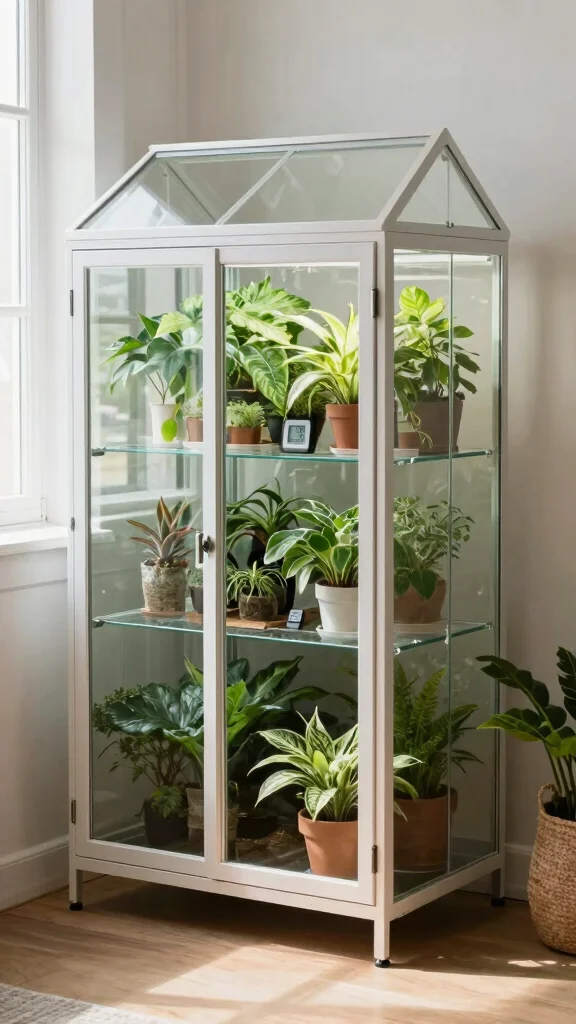
For plant enthusiasts seeking a dedicated space, a mini greenhouse cabinet is an ideal solution. These cabinets provide a controlled environment, perfect for nurturing delicate plants or starting seeds. The ability to adjust conditions according to your plants’ needs makes this setup both functional and beautiful.
This arrangement not only keeps your gardening supplies organized but also allows for an attractive display of your plants indoors. It combines practicality with style, enhancing the overall look of your home.
Consider these tips when setting up your cabinet:
– Choose a cabinet with transparent doors for easy visibility.
– Incorporate shelves to accommodate plants of various heights.
– Add a small fan for air circulation if necessary.
This setup merges functionality with aesthetics, making it a stunning addition to your living space.
6. Plant Ladder Display
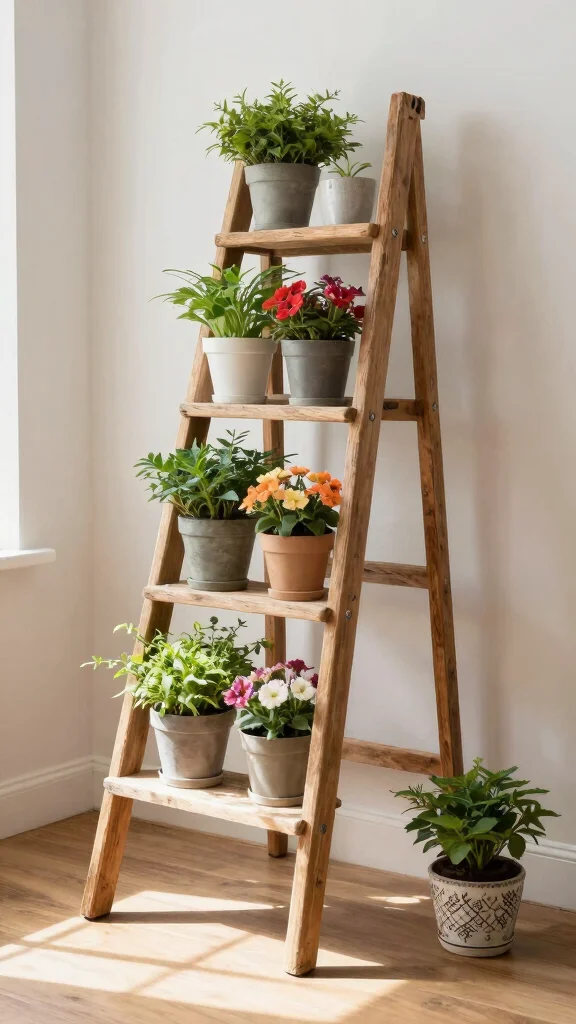
Repurpose an old ladder or invest in a decorative one to create a charming plant display that adds character to your home. A ladder provides multiple levels for showcasing plants, enhancing their beauty while bringing a rustic touch to your decor. This creative approach allows you to go vertical without bulky shelving.
The unique display draws attention and makes it easy to move plants around as needed, ensuring they receive optimal light. It’s a delightful way to combine functionality with artistic expression.
Here are some ideas for your ladder setup:
– Secure the ladder to the wall for safety, especially if tall.
– Mix different plant types for a playful yet organized look.
– Place small decorative items between plants for added charm.
This setup not only serves a purpose but also transforms into a delightful DIY project that enhances any room.
7. Repurposed Furniture Planters
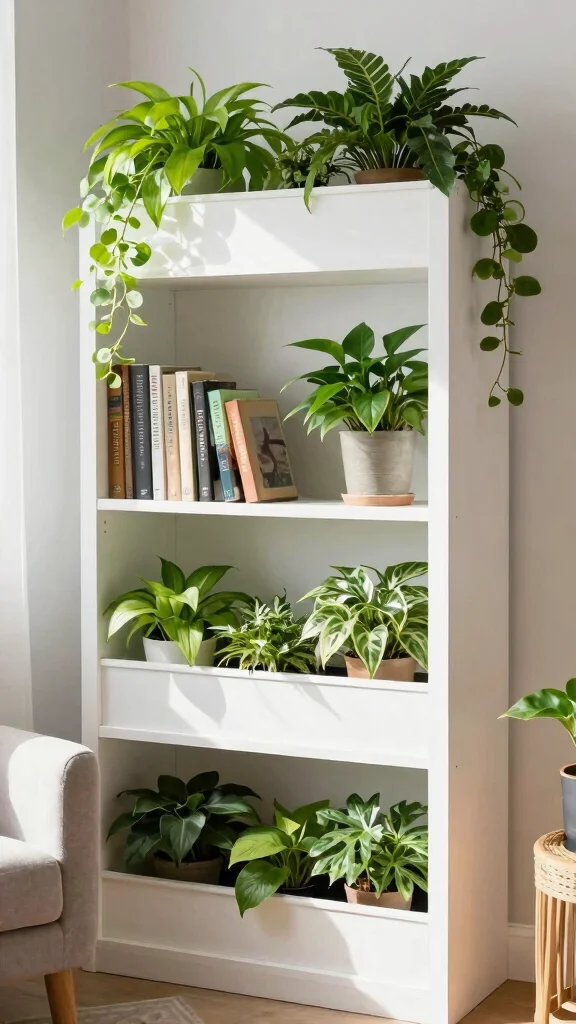
Breathe new life into old furniture by turning it into unique plant containers. An old dresser, bookshelf, or side table can become a creative focal point in your indoor garden. This eco-friendly DIY project adds character to your space while allowing for personal expression.
This approach is customizable to fit any decor style, enabling you to design eye-catching arrangements that showcase your favorite plants. It provides ample space for various plant types, turning your home into a lush oasis.
Consider these tips for repurposing furniture:
– Treat any furniture for water resistance before planting.
– Use liners or dishes to protect the wood from excess moisture.
– Paint or refinish the furniture for a fresh appearance.
This creative strategy not only looks great but also adds a personal touch to your decor.
You might also like
8. Plant Wall Art
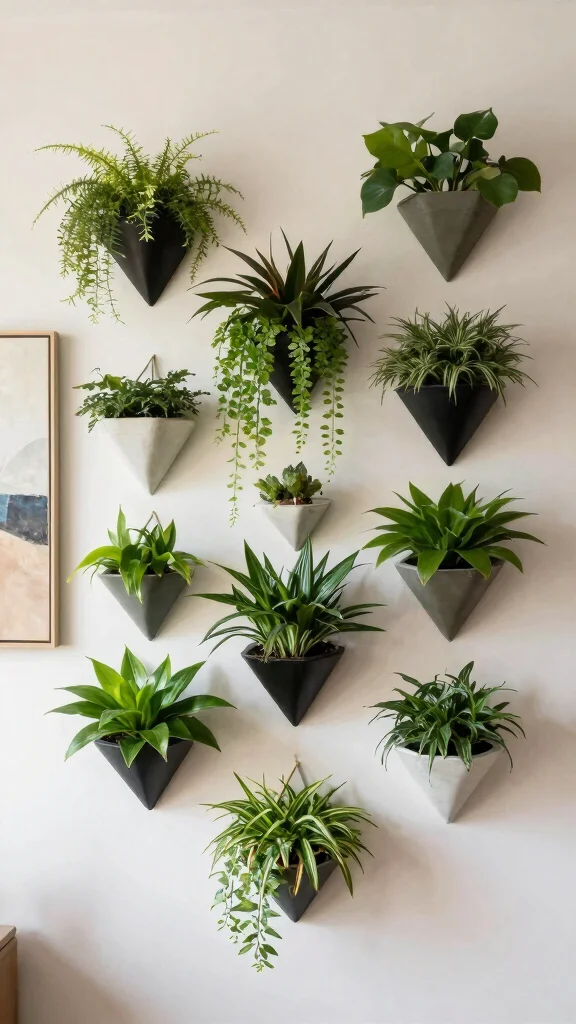
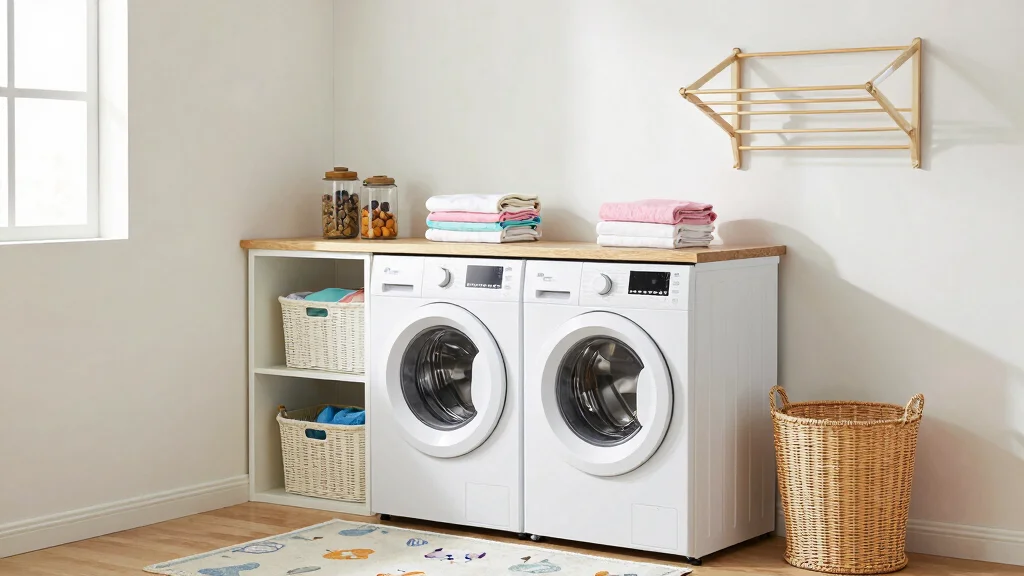
Transform your wall into a living masterpiece with plant wall art. By using wall-mounted planters or vertical garden systems, you can create a stunning feature that brings life to bare walls. This innovative setup is perfect for renters or anyone wanting to make a statement without extensive renovations.
The unique and bold aesthetic adds vibrancy to your home, allowing for creativity in plant selection and design. It offers flexibility in how you want to express your style through greenery.
Here are some tips for creating plant wall art:
– Choose plants that thrive in indirect light, such as ferns or philodendrons.
– Mix various planter shapes and colors for visual impact.
– Incorporate artwork around the plants to enhance the theme.
This living wall adds a fresh focal point to your home decor, inviting nature indoors.
9. DIY Hydroponic System
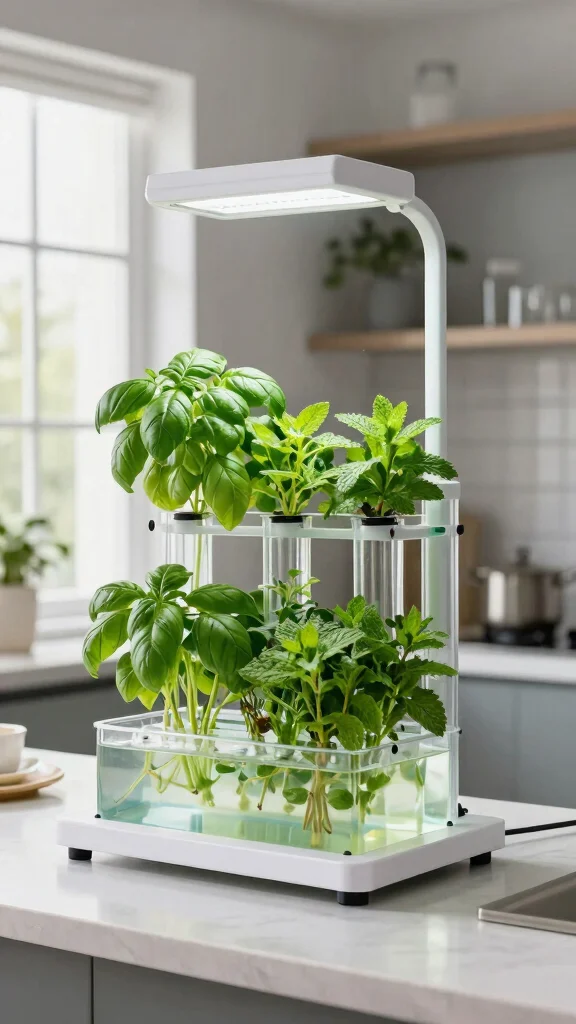
For the tech-savvy plant lover, a DIY hydroponic system offers a modern approach to growing plants without soil. This innovative method allows for faster growth and greater control over nutrients, making it ideal for herbs and leafy greens. It’s also a fascinating project that can be customized to fit any space.
This setup not only results in quicker growth rates but also minimizes pest issues, providing an efficient way to cultivate your indoor garden. It can be adapted to fit various environments, making it a versatile option.
Consider these tips for your hydroponic system:
– Research the best method for your plants, like Deep Water Culture or Nutrient Film Technique.
– Regularly monitor pH levels for optimal growth conditions.
– Use grow lights if natural light is insufficient.
This modern gardening approach can redefine your indoor spaces, merging technology with nature.
10. Stylish Plant Carts
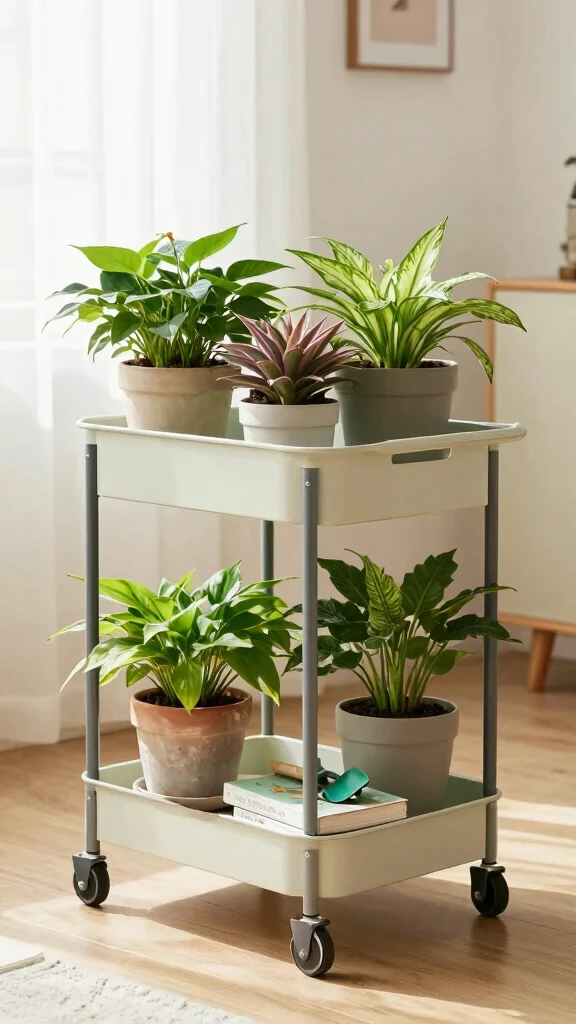
A stylish plant cart serves as both a functional and decorative element in your home. With wheels for mobility, you can easily move your plants to catch sunlight or rearrange your space. Featuring multiple tiers, a plant cart can house various plant types while adding a trendy touch to your decor.
This versatile piece not only adapts to changing light conditions but can also double as an accent table, enhancing your overall aesthetic. It simplifies the process of organizing and maintaining your indoor garden.
Consider these tips when selecting a plant cart:
– Choose a cart with sturdy shelves that match your home style.
– Use lightweight pots for easy movement.
– Include gardening tools or decorative items on lower shelves.
With a plant cart, you can effortlessly curate your plant display while keeping your indoor garden organized.
11. Cozy Reading and Plant Nook
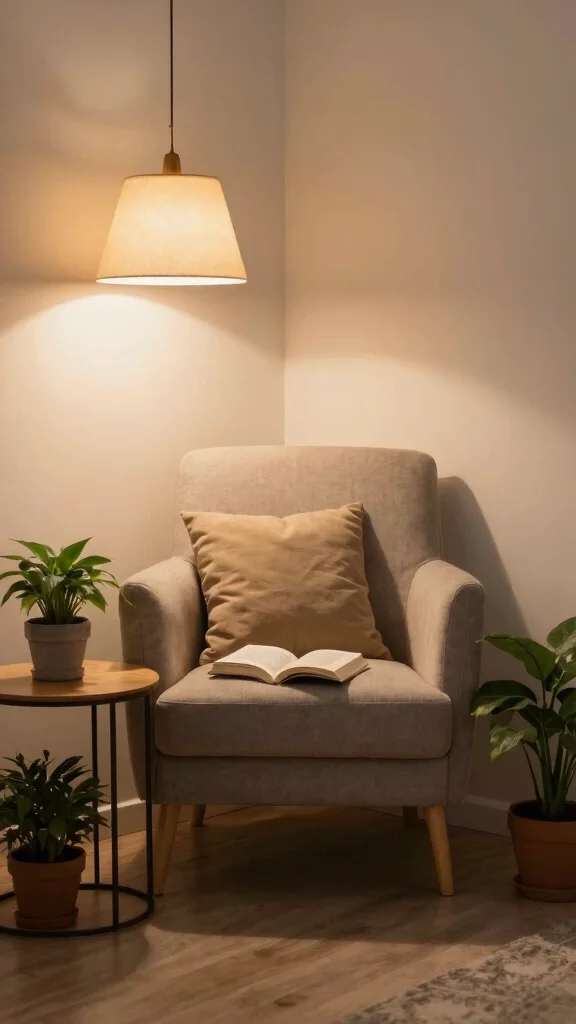
Create a cozy nook where you can unwind with your plants and a good book. A small armchair paired with a side table for your favorite reads, along with a few low-maintenance plants, can enhance the atmosphere. This inviting space is perfect for plant lovers looking to relax.
The combination of plants and comfort not only improves indoor air quality but also creates a serene environment for enjoying your greenery. This nook becomes a personal retreat that harmonizes relaxation with plant care.
Here are some tips for your reading nook:
– Select low-light plants for areas with minimal sunlight.
– Add soft textiles like cushions and throws for added comfort.
– Incorporate good lighting for reading and showcasing your plants.
This cozy nook will quickly become your favorite spot, blending comfort and greenery beautifully.
Did you know? In a cozy reading nook, just two low-maintenance plants can boost air quality and help you relax up to 20% faster. Pair them with a comfy armchair and a warm reading light, and your greenhouse set up inside becomes a personal retreat.
12. Under Stair Planters
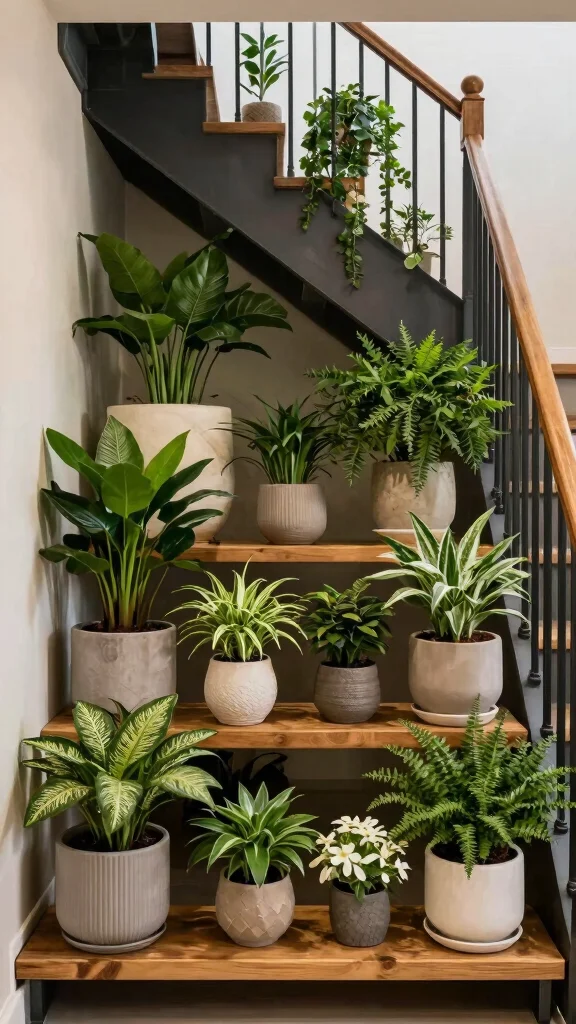
Maximize the underutilized space beneath your stairs by creating a charming planter setup. This area can be transformed into a delightful indoor garden with shelves or stacked planters, providing a unique design element in your home. It’s an excellent way to make the most of otherwise wasted space.
This creative use of space not only showcases a variety of plants but also adds a personalized touch to your decor. It encourages you to think outside the box and find beauty in unexpected places.
Consider these tips for under stair planters:
– Choose plants that thrive in low light, such as snake plants or ZZ plants.
– Incorporate a mix of heights for visual appeal.
– Use decorative pots that align with your home’s aesthetic.
This idea not only maximizes your indoor space but also adds a distinctive flair to your home decor.
You Might Also Like
13. Sunroom Sanctuary
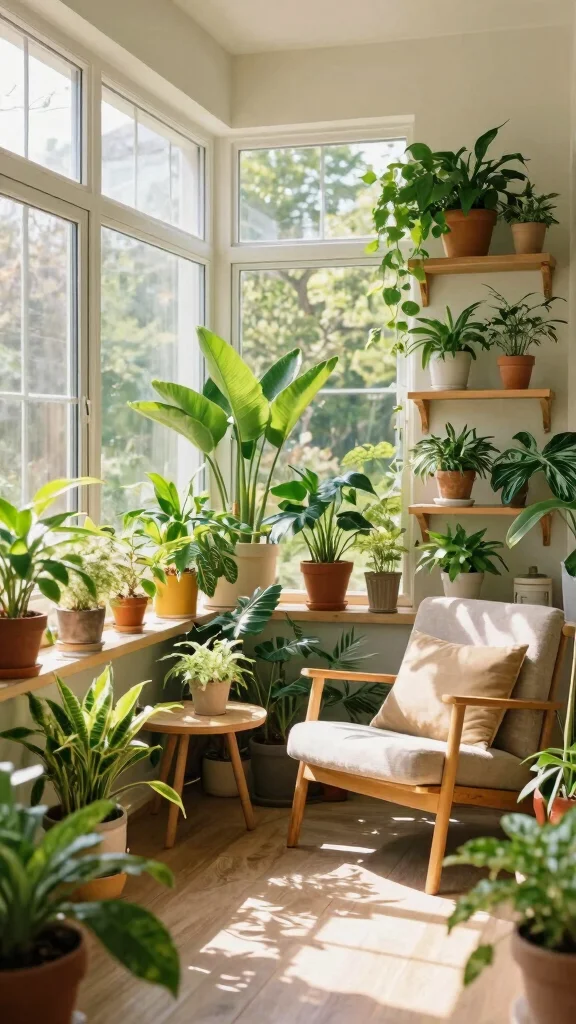
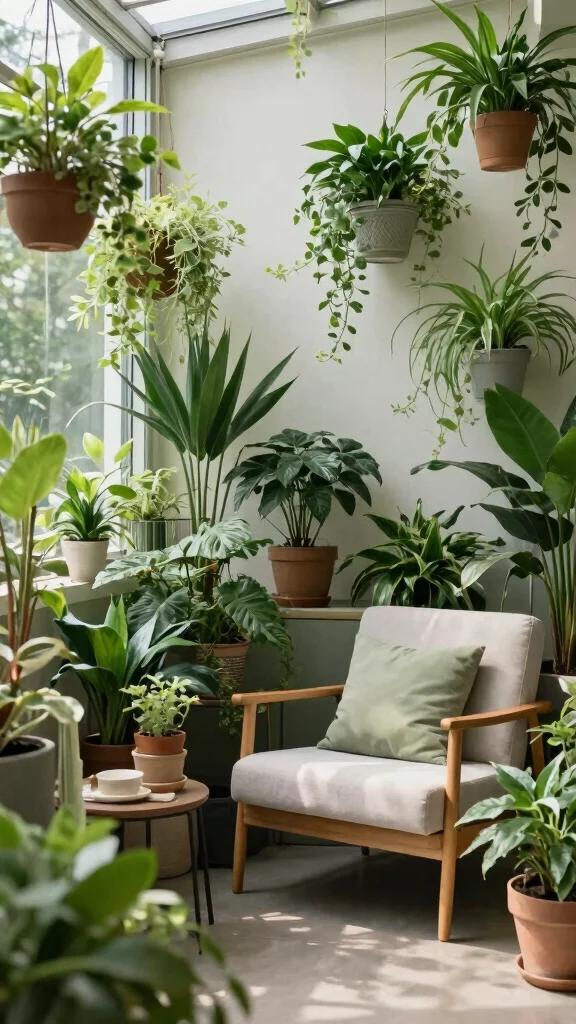
If you have the luxury of a sunroom, consider transforming it into a tranquil plant sanctuary. This dedicated space, filled with natural light, creates an ideal environment for various plants. Adding comfortable seating makes it a perfect retreat for relaxation and plant care.
The abundance of sunlight encourages optimal plant growth while providing a serene space that promotes mindfulness. This versatile area can be tailored to accommodate different plant types, enhancing your indoor oasis.
Here are some tips to create your sunroom sanctuary:
– Use sheer curtains to filter harsh sunlight while allowing light in.
– Incorporate outdoor furniture for a breezy, natural feel.
– Add shelves and hanging planters for extra greenery.
This setup can become your personal haven, beautifully blending comfort and nature.
14. Glass Jar Plant Holders

An innovative way to display plants is by using glass jars as holders. This simple concept can create dynamic visual effects, especially when arranged in clusters on a shelf or table. Glass jars are perfect for propagating cuttings or creating terrarium-like environments.
This affordable and easy-to-source idea is eye-catching and versatile, making it suitable for various plant types. It offers a unique way to showcase root systems, adding an intriguing element to your decor.
Consider these tips when using glass jars:
– Choose jars in various sizes and shapes for diversity.
– Ensure proper drainage using pebbles at the bottom.
– Add decorative stones or colored water for flair.
This setup adds a quirky, vibrant touch to your home decor, making your plants a focal point.
Fun fact: glass jars can boost humidity by up to 60% for cuttings. When clustered on a shelf, they act like a mini greenhouse set up inside your space—affordable, stylish, and perfect for propagating multiple plants at once.
15. Seasonal Plant Switch-Up

Embrace the changing seasons by rotating your plants according to the time of year. This practice keeps your indoor garden fresh and allows you to highlight seasonal favorites. In spring, vibrant flowers can brighten your space, while warm-toned foliage may be perfect for fall.
This approach not only keeps your decor feeling new and exciting but also encourages creativity and personal expression. Adapting your plants to seasonal changes helps you connect more deeply with nature.
Consider these tips for your seasonal switch-up:
– Create a checklist of seasonal plants to feature.
– Monitor how different plants respond to changing environments.
– Use seasonal decor to complement your plant choices.
Regularly rotating your plants keeps your space lively and engaging throughout the year.
16. Plant Care Stations
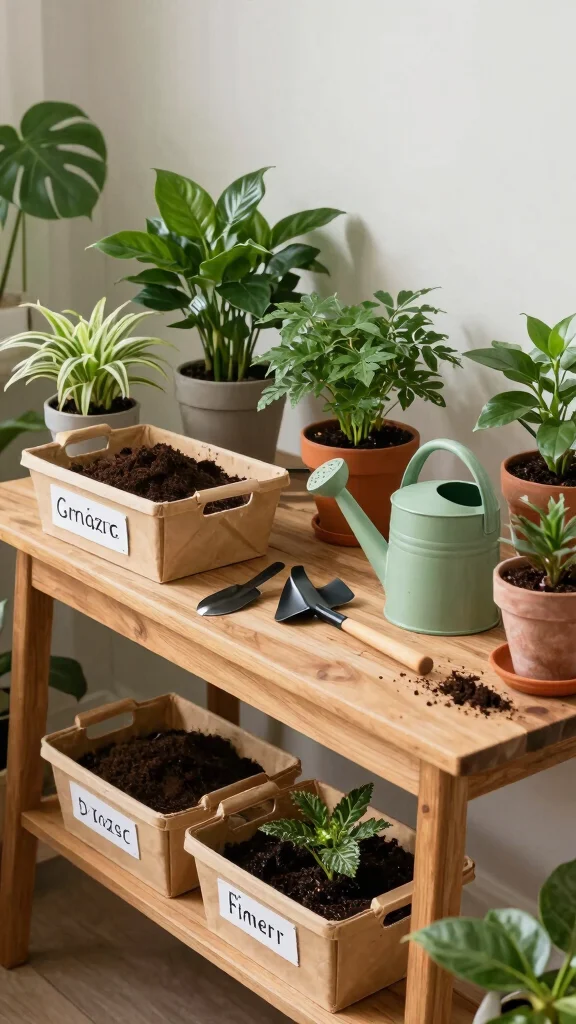
Establish dedicated plant care stations to keep your gardening supplies organized and accessible. These stations can house potting soil, tools, and watering cans neatly stored in one area, simplifying indoor plant maintenance.
This setup enhances efficiency and ensures that you have everything you need right at your fingertips. You can also style your station to fit your home decor, adding a touch of personal flair.
Here are some tips for creating your plant care station:
– Use labeled bins or baskets for easy identification.
– Incorporate a small workspace for potting and repotting.
– Personalize your station with plant-themed decor.
An organized plant care area makes tending to your indoor garden a seamless and enjoyable experience.
Conclusion
Creating an indoor greenhouse setup not only beautifies your living space but also fosters a connection with nature that can be incredibly rewarding. By incorporating these 16 ideas, you can tailor your indoor garden to fit your style and needs. Each setup enhances your plant care routine and elevates your home decor. Start planning your green oasis today, and enjoy the journey of indoor gardening.
Frequently Asked Questions
How can I start a greenhouse set up inside a small space without clutter?
Start by measuring your space and picking a compact greenhouse designed for small spaces. Use vertical solutions like wall-mounted shelves and tiered plant stands to maximize floor space. Choose a modular frame with easy access for watering and pruning, and add waterproof trays and hidden cable management to keep things tidy. For lighting, install compact LED grow lights that mount overhead or along shelves to minimize footprint while giving plants strong light. Regularly wipe panels and ensure airflow to prevent mold and keep leaves healthy. This setup emphasizes space-saving solutions and indoor gardening goals for a calm, functional corner.
Which space-saving solutions are most effective for an indoor greenhouse design?
Think vertical: wall-mounted shelves, tiered plant stands, and rolling carts let you fit more plants in a small area. Use modular benches that can be reconfigured as your collection grows, and choose a compact, lightweight frame with good access for watering and pruning. Place plants along bright walls and corners to maximize light, and add a small fan for airflow to keep leaves happy. This approach aligns with strong space-saving solutions and greenhouse organization for easy maintenance.
What essential plant care tips keep indoor plants thriving in an inside greenhouse setup?
Prioritize a consistent watering schedule based on potting mix and plant type, ensure drainage, and monitor humidity and temperature with a small thermometer or hygrometer. Feed with a balanced fertilizer, prune regularly to boost airflow, and inspect leaves for pests. Rotate plants so they receive even light, and keep the space clean to prevent disease. These plant care tips help your indoor gardening thrive inside a greenhouse set up inside.
How should I organize my greenhouse inside for easy maintenance and access?
Label everything and create zones based on light and water needs. Use a rolling cart or pull-out shelves for tools, pots, and irrigation supplies to keep them within reach. Group plants by care routine, and reserve a dedicated cleaning day to wipe glass, drain trays, and sanitize pots. Keep cables tidy and use clear containers for quick visibility. This greenhouse organization approach makes indoor plant maintenance simpler and faster.
Can I grow year-round indoors, and what climate controls do I need?
Yes—with reliable lighting and climate control. Invest in full-spectrum LED grow lights, a thermostat or heater for cooler months, and a humidifier or dehumidifier to match your plants’ needs. A small fan improves air circulation, and timer controls save energy. Start with a basic setup and expand as you learn your plants’ seasonal needs, so you can enjoy fresh greens year-round in your indoor greenhouse.
Related Topics
indoor gardening
greenhouse setup
small spaces
plant care tips
greenhouse organization
space-saving solutions
easy indoor plants
beginner friendly
indoor plant maintenance
DIY greenhouse
home decor
urban gardening
Leave a Reply